Sir Richard Rodney Bennett, C.B.E. Obituary
Michael Berkeley remembers the composer and pianist who was his teacher
As a child, I recall Lennox saying one day that he had a young but gifted boy coming for lessons, and that this child had a facility for music that he had rarely seen before. That facility stood Richard Rodney Bennett in good stead as he advanced through life studying, successively, with Lennox, Howard Ferguson and Pierre Boulez, writing complex works for the concert hall – and award-winning scores for films such as Murder On The Orient Express, Far From The Madding Crowd and Billion Dollar Brain.
I think the same facility was also something of a bugbear, because it is so much more difficult to find your own voice when you can write so fluently in any style. Indeed, Richard ended his life writing light and cabaret music, which he enjoyed enormously and performed with great élan.
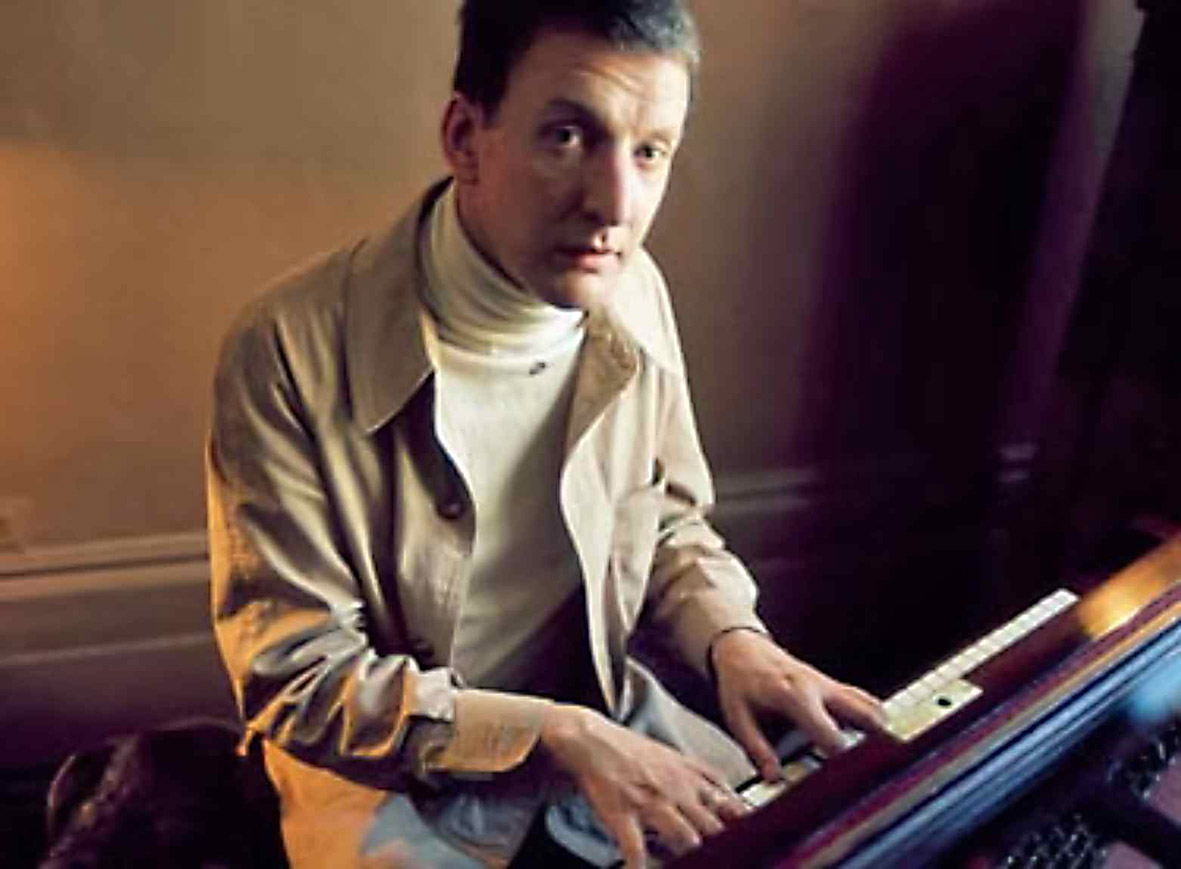
I owe Richard more than I can possibly say, because I left the Royal Academy of Music with lots of ideas but precious little developmental technique. The conductor Raymond Leppard looked at one of my scores, Meditation for Strings, and said ‘Lots of good ideas, but you need someone who can make you limit them and work them. Richard Bennett would be ideal’. Richard did not as a rule take pupils, but, having looked at my music, he said he felt I had something he could help to consolidate. At the time I was studying with my father, but Richard said ‘Lennox is far too nice to be able to give you what you need, but I can’ - and, boy, did he not. First of all he asked me what I was going to write next, and when I said, as so many young composers do, that I wanted to write something for orchestra, he retorted ‘Absolutely not! You are going to start with something for just two or three instruments, where you can’t get away with any gestures – and where you will have to justify the presence of every note’.
Not being a complete fool I opted for three, rather than two, instruments, and for the next eighteen months I rewrote my String Trio no fewer than eleven times, until I could indeed account for the existence of every note. When it was finished, Richard declared himself satisfied: ‘Yes, good – I don’t think we’ll have to do that again’. I breathed a sigh of considerable relief. But what I had learned was the importance of organic growth in music. During that year and a half Richard encouraged me to use aspects of serialism – not to make me into a twelve-tone composer, but to show me how a row of notes could be turned upside down and run backwards, so that the listener might not know why the music sounds integrated and organic, but does know that somehow it is, that it has integrity of purpose.
Though Richard felt he had not learned a great deal from either Howard or Lennox, I was aware of things he had, in fact, assimilated from both – maybe only subconsciously from my father – and they emerged in his handling of me. He was always keen to help composers find their own voice, for instance, and did not want them to ape him or anyone else. And he believed that technique brought a means of clear expression, so that a student composer could capture in notes music which the performer could immediately lift off the page. Like Lennox, Richard would get me to read his latest composition while he read mine. The only trouble was that his inner ear was so good that he had usually reached the end of my piece long before I had got more than a few pages into his.
And yet, and yet … I sometimes had the strange notion that Richard almost envied my simple singularity of voice, that in not having the ability to write in any style, and having to stay with what I could do in my own language (however naïve that might have been), I was lucky. For example, he liked my Oboe Concerto, and the way it wears its heart on its sleeve.
When the whole world of sound and style is at your fingertips, where to start? With composers of great intellect I have sometimes noticed that the rigour of self-criticism can be crippling, where a more instinctive but less cerebral composer (Poulenc springs to mind) writes more fluently. That is why Richard Bennett’s film music, which often had to be written in a couple of weeks, and was programmatic rather than abstract, is often so unashamedly melodic and memorable. When you don’t have time to question your ideas but have to go with your first thoughts there is a kind of liberation that can be very helpful to the overly self-analytical.
Nevertheless I was constantly in awe of Richard’s ability to hear and conjure up exquisite sounds through the tip of an extra sharp, extra soft pencil – and all delivered courtesy of the most beautiful and precise musical calligraphy I had yet seen. Indeed, a finely-tuned sense of calibration and a precision in thought and execution lay at the heart of his formidable talent. As with other young composers, I was occasionally recruited to turn the pages for Richard’s piano duet recitals with Susan Bradshaw, and I was amazed at his ability to read and perform with crisp articulation the most hair-raisingly complex of scores. If Richard could be tart, not to say bitchy, he was also enormously generous to his friends and young musicians. He got me to write a Passacaglia for him and Susan at a time when I was hardly besieged with commissions.
Another characteristic which Richard shared with Lennox – and with most musicians worthy of the name – was a consuming interest in the other arts, particularly literature, painting and film. Discussion of these, and of course the latest gossip, was an essential part of our sessions. In fact, before we got down to work I would have to impart the latest musical naughtiness, passed on by my mother, Freda, or by Lennox’s publisher, Sheila MacCrindle, a special confidante of Richard (for whose memorial service, at Richard’s request, I read one of the Archy and Mehitabel poems by Don Marquis). Much of the chat in musical circles at the time involved, though always affectionately, the Master of the Queen’s Music, Malcolm Williamson. I liked Richard’s icy sense of humour, and the way it revelled in the ridiculous. His sharp mind meant that he did not suffer fools gladly, and you had to be on your mettle with him when discussing any of the arts, but especially music. His appreciation of natural talent meant that he did not limit himself to great names, but could find true creativity even when it was buried beneath layers of irrelevance. For instance, while amused by some of Malcolm Williamson’s wilder eccentricities and behaviour, he always saw him as a true composer. In fact he maintained that Malcolm was the most naturally gifted composer of his and Richard’s generations, but that he had rather squandered his gifts, which Richard deeply regretted.
Richard Bennett’s Concert Music and his works for the stage, like the opera The Mines of Sulphur and the ballet Jazz Calendar are a worthy legacy of his brilliance, and much of his instrumental writing is, and will continue to be, savoured by players (especially young ones) for its innate understanding of what their instruments can do, and do with grace and elegance.
He led his life to the full, and hugely enjoyed it. He did not like being in the presence of illness, and I suspect that part of him would have appreciated a relatively quick coda, even though, when it came, his sudden death shocked his friends and admirers.