Berkeley Day at the Royal Academy of Music
Petroc Trelawny describes a growing creative partnership between the Royal Academy of Music and Berkeley Society, inspired by Berkeley’s tenure as Professor of Composition
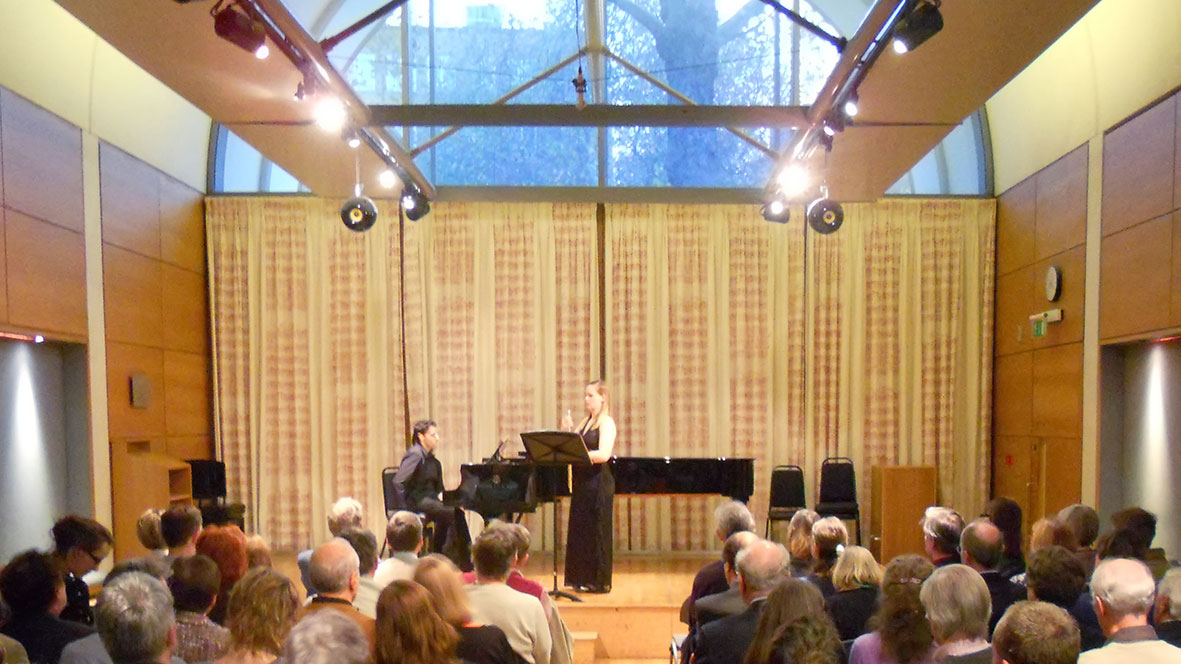
Lennox Berkeley’s twenty-two years as Professor of Composition at the Royal Academy of Music have inspired a growing creative partnership linking the conservatoire and the Berkeley Society. The 20th November 2011 saw the third ‘Berkeley Day’ in the David Josefowitz Recital Hall, an annual event supported by a generous donation from Mr Noriyuki Ida, in memory of his daughter, pianist, and former committee member, Kumiko Ida.
Berkeley’s students at the RAM included Sir John Tavener, Nicholas Maw, Peter Dickinson and Brian Ferneyhough, as well as former LBS President Sir John Manduell. The 2011 Berkeley Day welcomed another of Lennox’s distinguished pupils, Sir Richard Rodney Bennett. Before a recital featuring Academy students, LBS Chairman Petroc Trelawny led a discussion on the role of the composer as teacher. Both Bennett and Michael Berkeley were taught by Lennox, and later Michael took additional lessons with Bennett.
Sir Richard opened the conversation by explaining how he had first been drawn to Berkeley. ‘French music was always my thing, my mother played a lot of it and we had all the piano music at home. I fell in love with Ravel and Debussy, then I graduated to Les Six, through Nadia Boulanger, and inevitably to Lennox. When I won a scholarship to the Academy’, he continued, ‘Lennox seemed the right person to go to for lessons’.
Bennett recalled his first visit to the composer’s home at Warwick Avenue as a sixteen-year-old. ‘Freda and Lennox were incredibly kind to me, though I repaid them by spilling jam on their table. Hugely embarrassing’. He was to study with Lennox for two years, before the older man took time out to work on his operas Nelson and A Dinner Engagement, and Bennett became a pupil of Howard Ferguson.
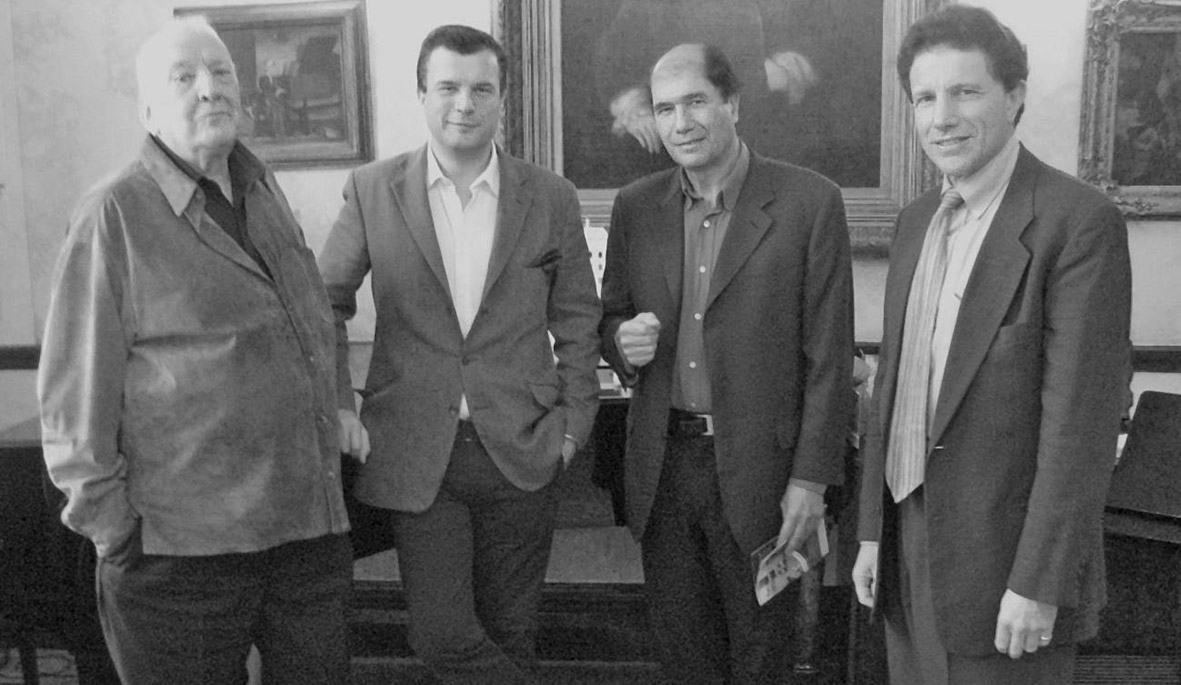
For Bennett, Berkeley was almost too nice to be an effective teacher. ‘He was far too kind. I had been writing music since I was seven, and whilst I had talent I was over facile. What I really needed was someone who was going to say to me, “That’s awful – you are writing far too fast, you are not thinking”. He was always too generous, always looking for something to approve of. And I didn’t need that’.
Bennett fondly recalled their meetings, when they would play through Bach church cantatas and Schubert piano duets – ‘music which I’ve never ceased to love’. But Bennett found a musician more enthusiastic about looking back than forward. ‘I was very curious about what was starting to happen in contemporary music. It was a lively time. I had known Elisabeth Lutyens since I was fourteen and I was trying to write twelve-tone music, God forbid. Lennox didn’t know what it was. I remember trying to convince him, sitting in some terrible little room way up in the eaves [of the Academy] explaining the series and the inversion and retrograde. I think he was horrified.’
Michael Berkeley pointed out it was strange his father wasn’t more draconian in his teaching style. ‘Under Nadia Boulanger [who had taught Lennox] no one was allowed to write a note of their own music for two years. First they had to study Bach cantatas, counterpoint, polyphony – some found it rather stifling.’ Turning to Sir Richard, he added, ‘It’s remarkable that, though he would explain how those things worked, he didn’t put you through the mill in the same way’.
Julian Berkeley, the composer’s middle son, also on the panel, commented that his father believed the most effective way of teaching was by example. ‘That was how he felt he could best communicate his ideas, not through verbal articulation’. Asked if Lennox enjoyed teaching, Julian replied that he thought his interest came in seeing what other people were doing. ‘At the Academy there was a continuous throughput of fresh ideas and young people wanting to try things and explore the new. That was very stimulating, even if it got in the way of his own work. But he would do that in the mornings and evenings, and then set aside the afternoons for teaching’. Lennox obviously found the process more congenial than Richard Rodney Bennett, who described his two years of teaching music as being ‘like giving blood’.
Bennett told the audience he regretted he hadn’t learned more about Berkeley’s friendships with Ravel, Poulenc and Nadia Boulanger. ‘I wanted him to tell me all about them, but he didn’t. Maybe I should have asked specific questions, but he wasn’t someone to open up without good reason’. Michael Berkeley made the point that his father ‘didn’t brag about things. He was always charmed if he thought you wanted to know, but he was also slightly surprised. He was not someone who would hold forth. He had a quietness about him and lived in his own world. Things had be dragged out of him.’
In a recent biography of Richard Rodney Bennett, Michael Berkeley is quoted as saying that when he listens to Bennett’s music he hears parts of his father in it. Invited to elaborate on this, he explained that it was ‘all to do with the sensibility of the orchestration, a real mastery that comes from the French school. There are sounds and techniques that my father loved in Richard’s music – the way he will colour something with harp and flute, which has a clear French influence, an aesthetic they shared.’
Bennett agreed, reflecting on his Summer Music, a work for flute and piano played in the concert that followed. ‘I couldn’t have written that without the French school – and possibly Lennox as well. It’s very much a pleasure piece, a fun piece. We came from the same place’.