Colin Horsley, O.B.E., F.R.C.M. Obituary
A tribute to the classical pianist and teacher by Berkeley biographer Peter Dickinson
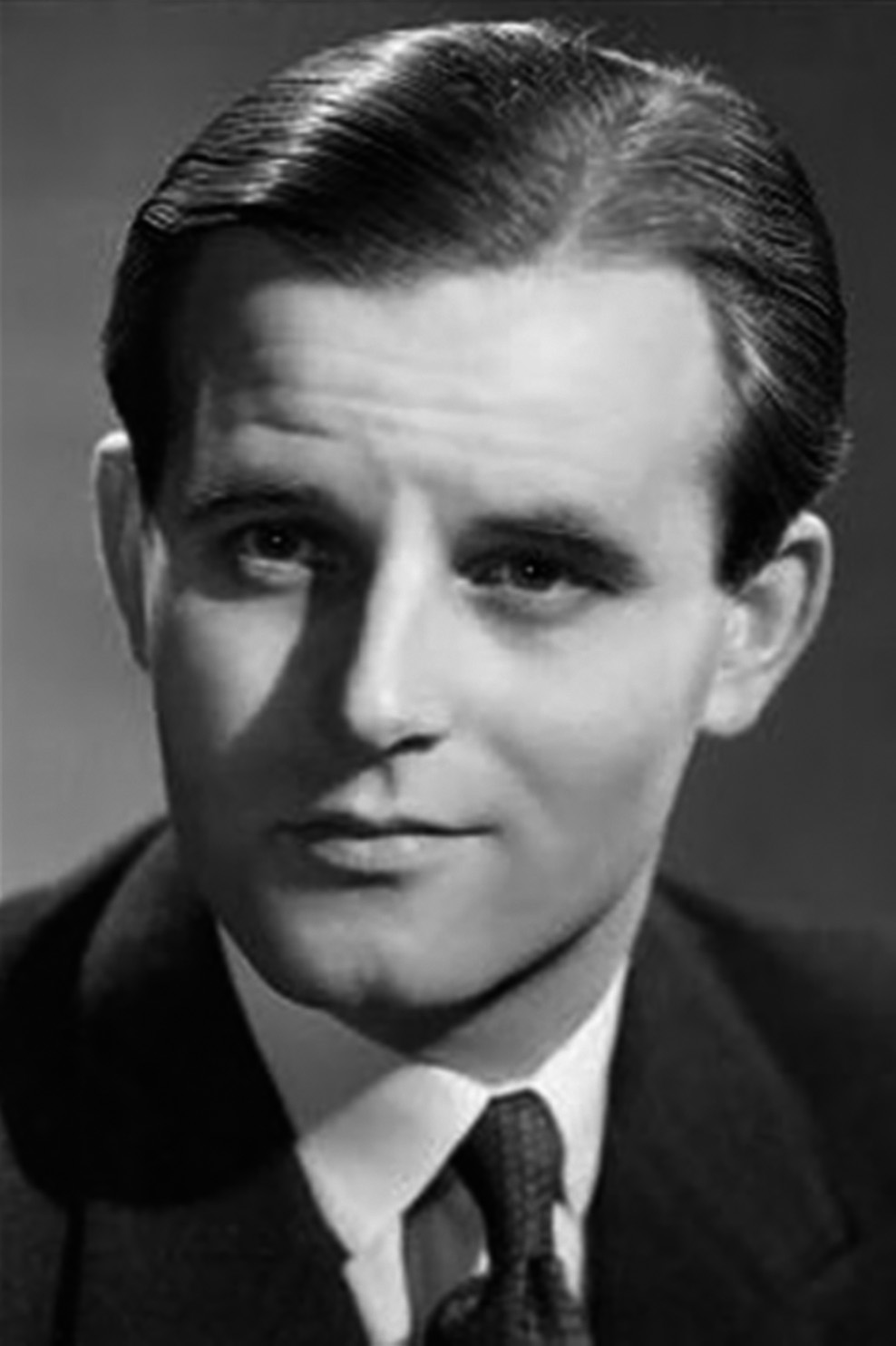
Colin Robert Horsley was one of the most distinguished British pianists of his generation. Early on, he moved from New Zealand to London, which became the focus for his professional career. In 1936 he won an Associated Board Scholarship to study at the Royal College of Music, where his teachers included Herbert Fryer and Angus Morrison, and he studied privately with Irene Scharrer and Tobias Matthay. In 1941 Horsley was acclaimed at the Royal College in a performance of the Saint-Saëns Piano Concerto No 2, but he made his official concerto debut in 1943, at the invitation of Barbirolli, in the Brahms Piano Concerto No 1 with the Hallé Orchestra in Manchester. Before that he had played at the National Gallery concerts and in two of Bach’s concertos for three keyboards at the Proms in 1940 and 1943.
Horsley then became known for Rachmaninov whose Third Concerto he played at the Proms in 1945 and 1949. Rachmaninov’s Rhapsody on a Theme of Paganini was a favourite, with three performances at Proms in 1951 and 1952. By then Horsley’s career had developed internationally. He eventually played with all the leading British orchestras, and toured abroad both in Europe and the Far East, including Australia and his native New Zealand.
He made his Wigmore Hall debut in 1943 with Mozart, Brahms and Franck, and another recital there in 1947 was admired by The Times: ‘He has a sure instinct about what the piano can do without overstepping its nature; his playing is distinguished by its shadings and gradation of tone. His attitude to music is still somewhat detached…’ Maybe, but Horsley’s objectivity was an asset when he dedicated himself to the performance of contemporary works. In 1946 he gave the premiere of Humphrey Searle’s Piano Concerto and played Medtner’s Third Piano Concerto at the composer’s memorial concert in 1952. Although he played the John Ireland Concerto at the Proms three times in the 1950s, and the Rawsthorne Second Concerto twice, his main contribution to contemporary music was his association with Lennox Berkeley.
Horsley and his close friend Val Drewry (a drama producer at the BBC) commissioned Berkeley’s Piano Concerto in B flat – one of the finest British examples of a piano concerto – and gave the premiere at the Proms in 1948. After that he played it over thirty times, sometimes with the composer conducting, and notably at the Festival of the International Society for Contemporary Music at Palermo in 1949. For modern music that setting had its problems: Horsley told me that taste in Palermo then had not moved forward much since 1899. Then Horsley commissioned Berkeley’s Concerto for Piano and Double String Orchestra and gave the premiere in 1958. He attributed the subsequent neglect of this work – it is now unknown, but worthy of revival - to the fact that he had Asian ’flu at the time of the first performance and therefore did not do it justice. And his indisposition was not even announced to the audience. The obituary in The Times (24 August 2012) describes this concerto as ‘one of the composer’s most impressive creations’. For many years the cadenza from the first movement was missing, which prevented performances, but I retrieved it from Horsley only last year and the complete score is now available.
Horsley was much in demand in chamber music, and played regularly with some of the leading artists, including a twenty-five year partnership with the violinist Max Rostal. Berkeley’s Horn Trio was another Horsley commission: he gave the first performance with Dennis Brain and Manoug Parikian in 1954, and they then recorded it. Berkeley’s substantial Piano Sonata had been premiered by Clifford Curzon in 1946, but it was Horsley who went on to give many performances, studied it with the composer, and recorded it, along with most of Berkeley’s piano output. All these initiatives vastly enriched the repertoire of twentieth-century British piano music.
Horsley and Berkeley first met through Val Drewry, when Berkeley was a colleague on the staff of the BBC at the end of the war. When Horsley later went to HMV to record Prokofiev and Szymanowski on 78s the producer was delighted and asked Horsley if he happened to have anything else. So he pulled Berkeley’s Six Preludes out of his case; they recorded them; and apparently that particular 78 record sold best of all. By the end of his career Horsley had clocked up some ninety performances of the Preludes alone.
Colin Horsley’s recordings show that he had an impeccable finger technique and complete command of Berkeley’s invariably pianistic, but sometimes taxing, passage-work. A review of his recording of Berkeley’s Six Preludes commended his ‘highly artistic performance (where) he has discovered the secret of true cantabile playing’. That, perhaps, was to be expected from a pupil of Matthay, who also taught Myra Hess.
Horsley was a visiting professor at the Royal Northern College of Music in Manchester (1964-80) and at the Royal College of Music (1965-90). He was awarded the OBE in 1963. In 1992 he retired to the Isle of Man, where his grandfather had been born, but he was still playing into his eighties. He was patron of the Isle of Man Symphony Orchestra and his hobbies were gardening and watching thriller films such as the Poirot sagas. He never married, but is survived by several nieces and nephews.